A pad thick enough for the boat, anchored enough for the shed, and placed where the setback allows
Boat trailers, RVs, sheds, standby generators, hot tubs and HVAC units all want a slab that won't sink in the sand — and the county has opinions about where a shed can sit.
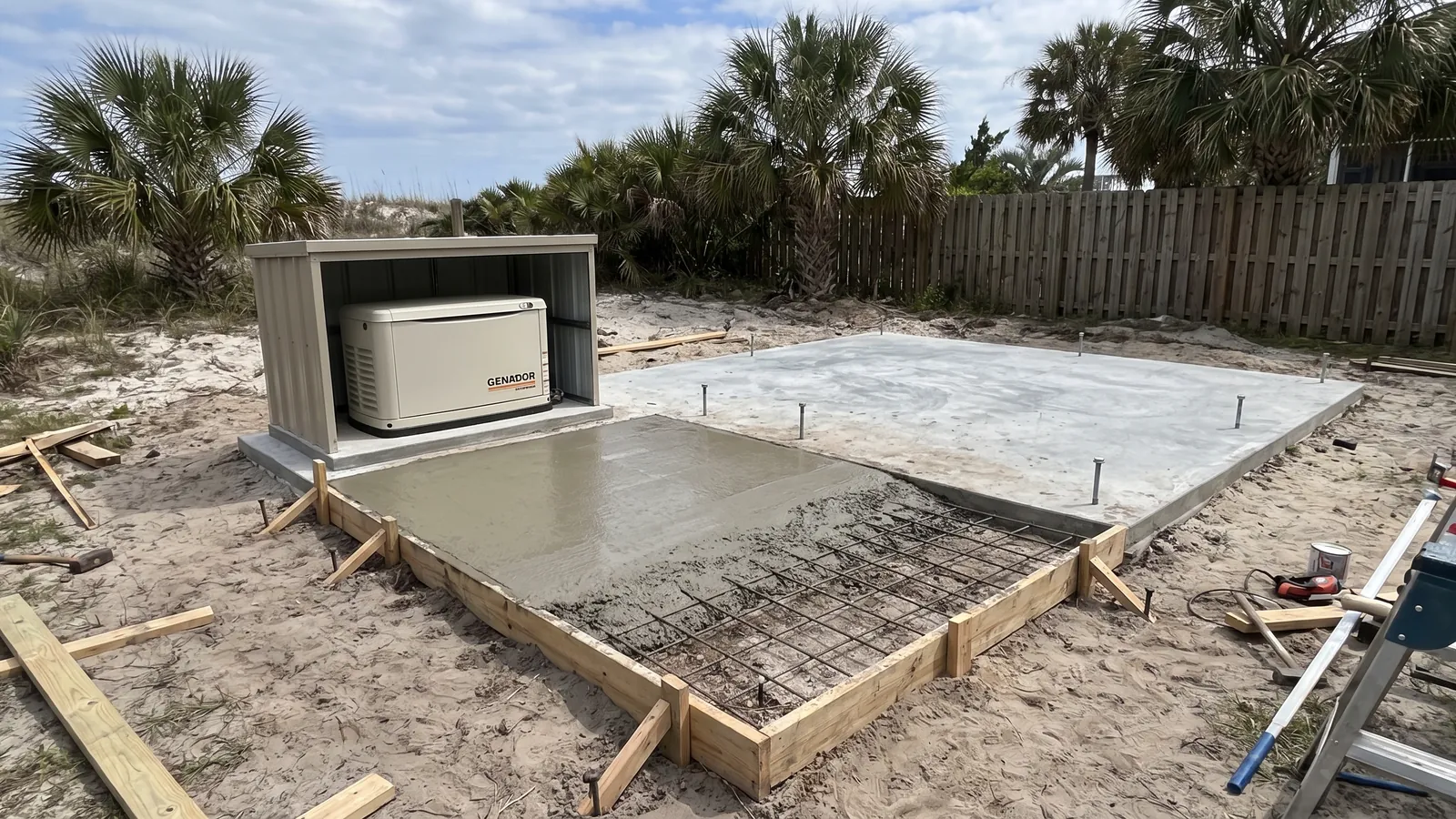
Every Grand Strand yard eventually wants a pad for something. The boat trailer that's been on the lawn, the RV that's been in the street, the shed that came as a kit with a flimsy floor, the standby generator that every hurricane season sells, the hot tub, the second HVAC unit. They all want the same thing — a slab that stays flat and dry on the sand — and they differ in thickness, reinforcement and what the county has to say. A shed slab is four inches with a turned-down edge and anchor bolts set in the wet concrete where the shed's floor plate will sit, so the shed doesn't walk in a storm; the county exempts detached accessory buildings of 200 square feet or less from a building permit, but bigger ones need one, and all of them have to sit inside the setbacks — 7.5 feet from the side line and 15 from the rear in the SF6 districts. A boat or RV pad is five or six inches with rebar, wide enough for the trailer plus the step-off, often tied to the driveway so you can back straight onto it. A generator pad is a small, thick, level slab with a conduit sleeve for the gas and electrical, placed where the installer's clearance rules (and the neighbors' noise tolerance) allow.
What they all share underneath is the base. A pad poured on the lawn's topsoil sinks at one corner the first wet winter, and a tilted shed slab means a door that won't close and a generator that trips its tilt sensor. We cut the sod, compact the subgrade, bring in and compact a base course, form it, set the reinforcement on chairs, and pour with the slope that the thing on top wants — dead level for a shed and a generator, a slight fall for a boat pad so it drains.
What's included
Thickness to the load
4 in for sheds and generators, 5–6 in with rebar for boats, RVs and anything on a trailer.
Turned-down edges and anchors
Shed slabs with a thickened perimeter and anchor bolts set in the pour at the floor plate.
Setbacks and permits checked
Horry County's 200-sq-ft accessory exemption and the SF district setbacks confirmed; the permit pulled when the shed is bigger.
Dead level or drained
Level for sheds, generators and hot tubs; a slight fall for trailer pads.
Conduit sleeves
PVC sleeves under generator and hot-tub pads for the electrician and the gas line.
Access
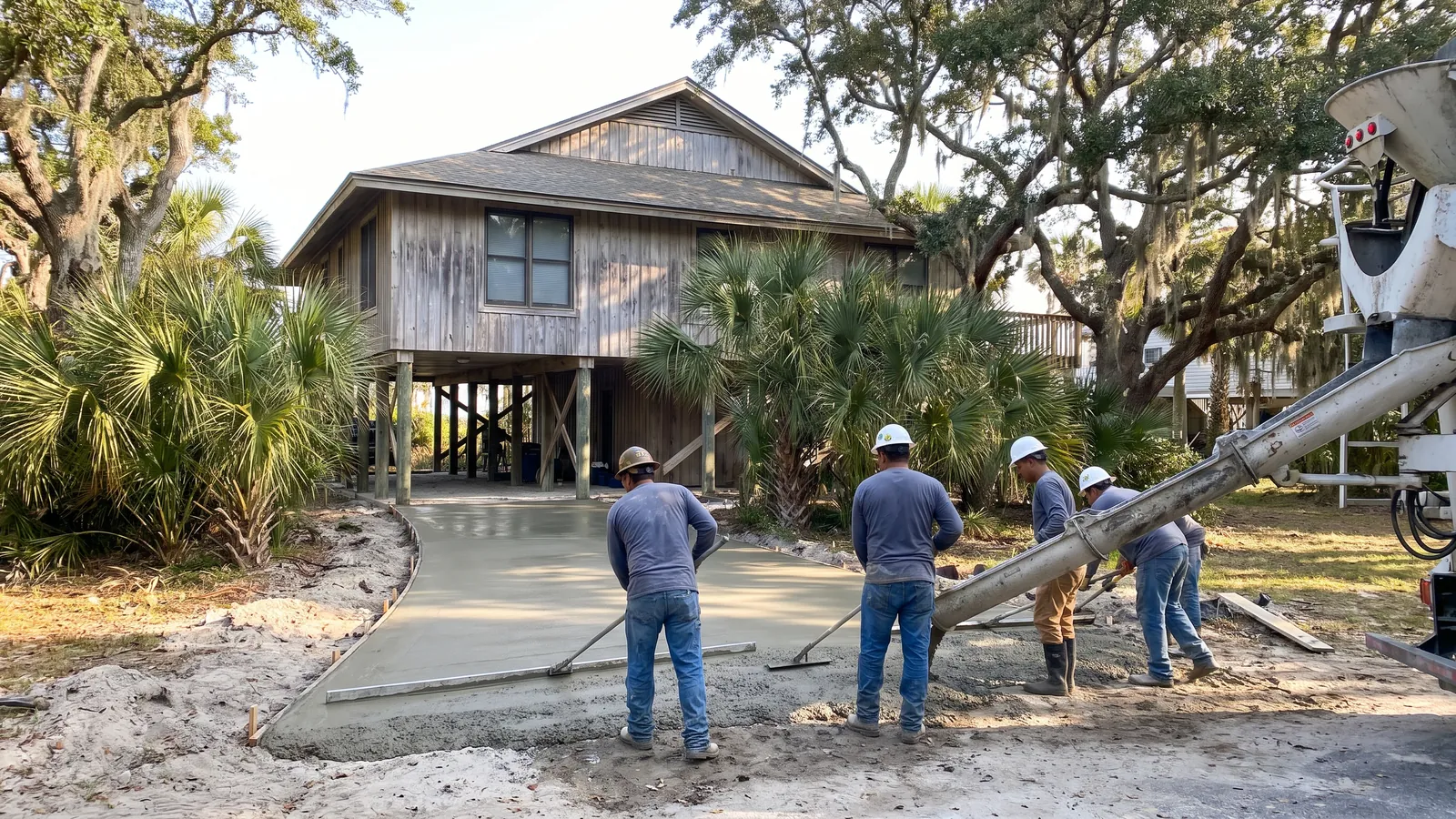
Tied into the driveway so the trailer backs straight on; a short approach poured where it has to cross the lawn.
Shed, boat, RV and generator pad cost in Myrtle Beach, SC
| Job | Typical price | Notes |
|---|---|---|
| Shed slab, 8 × 10 ft (80 sq ft) | $900 – $1,600 | Turned-down edge, anchor bolts |
| Shed slab, 12 × 16 ft (192 sq ft) | $1,800 – $3,000 | Under the 200-sq-ft exemption |
| Generator pad, 4 × 6 ft | $450 – $900 | Level, conduit sleeve |
| Hot tub pad, 8 × 8 ft, 6 in | $900 – $1,600 | Reinforced, level |
| Boat trailer pad, 12 × 30 ft, 5–6 in | $3,200 – $5,500 | Rebar, tied to the drive |
| RV pad, 14 × 45 ft, 6 in | $5,500 – $9,500 | Rebar, drained, hookup sleeve |
| HVAC or equipment pad | $250 – $500 | Small precast-replacement slab |
These are 2026 Grand Strand ranges so you can budget. Your written price is itemized — removal, base, thickness, reinforcement, finish, joints, the permit and its inspections — and good for 30 days.
Recent work
Questions we get about slabs and pads
Do I need a permit for a shed slab?
In unincorporated Horry County, a one-story detached accessory building of 200 square feet or less needs no building permit; larger sheds do, and the slab is part of that permit. Inside the cities the thresholds differ. All of them have to respect the setbacks, and HOAs review sheds. We check your parcel before we quote.
How far from the property line can a shed go?
In the county's SF6 and MSF6 districts, 7.5 feet from the side line and 15 from the rear; SF20 is 15 and 25. Some districts allow accessory structures closer; we confirm with Planning and Zoning for your district rather than guessing.
Can you pour a generator pad before the installer comes?
That's the usual order: the installer gives us the pad size, clearance and sleeve locations, we pour, and the generator goes on after it cures. We work from the manufacturer's pad drawing.
Will a boat pad sink?
Not on a compacted base with a thick slab. The boat pads that sink are the ones poured on the lawn at four inches with no base, which is most of the ones we replace.